Persona – A human-centered solution guide
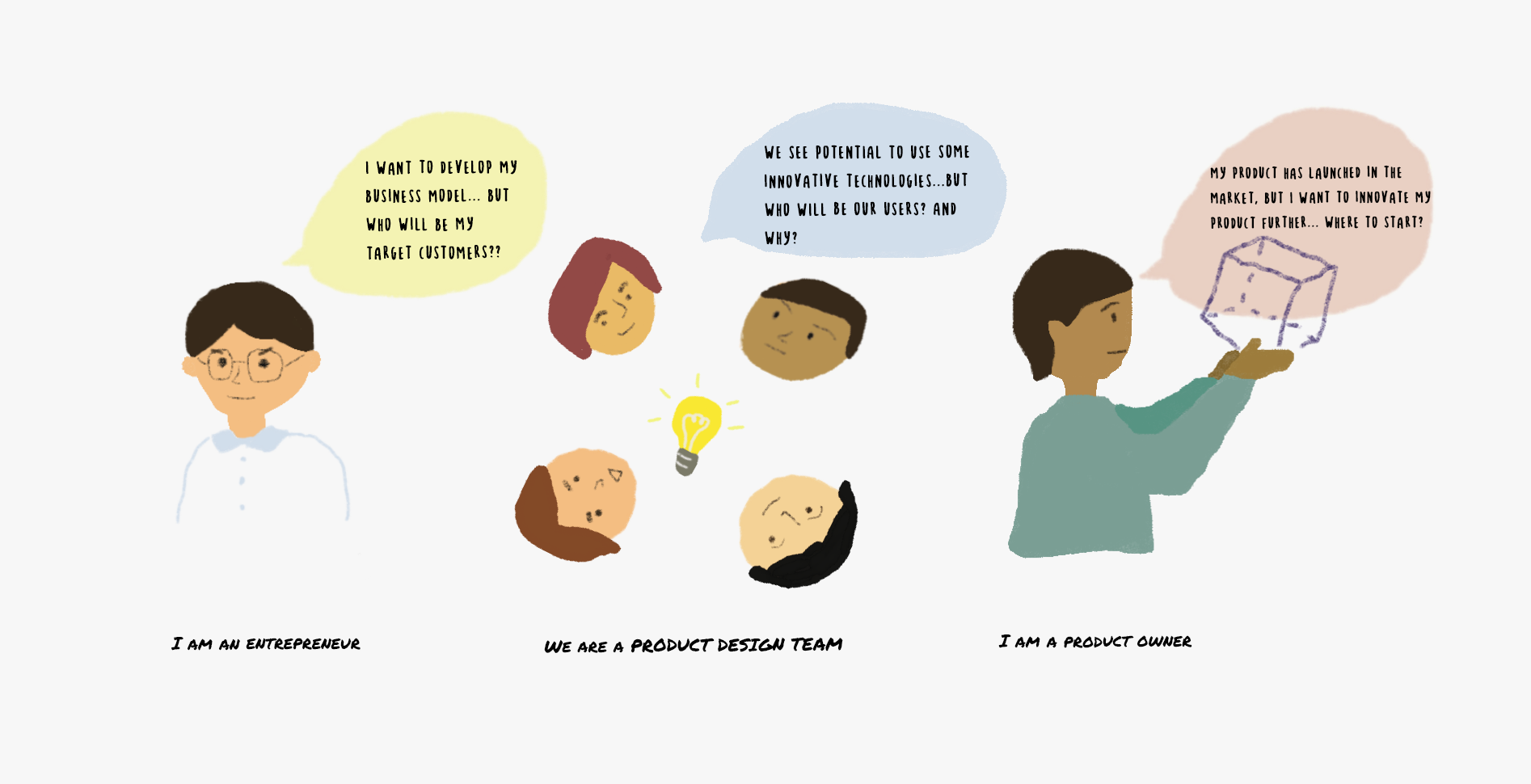
- Are you an entrepreneur? Wondering who should be your target customers to ideate your business model?
- Are you and your team planning to come up with amazing, innovative product ideas, but not sure who your target users are and why they will be your primary user group?
- Even in the later stage, you’ve already released your product, but seeking for product innovation opportunities?
If so, it is the perfect timing for your team to craft a Persona and walk through each element of the Persona with your team, such as the person’s desires, motivations, needs and pain points.
What is Persona?
Persona describes your target user as a fictional person, who will use your product which consists of the personality, person’s background, needs, motivations and pain points.
Why Persona – to build a sense of empathy
But why would a persona be important to have in your business?
Sometimes, the business/ market strategy team uses the term “customers” or “consumers”, the product team uses the term “users”, and the content strategy team describes them as “target audiences”….
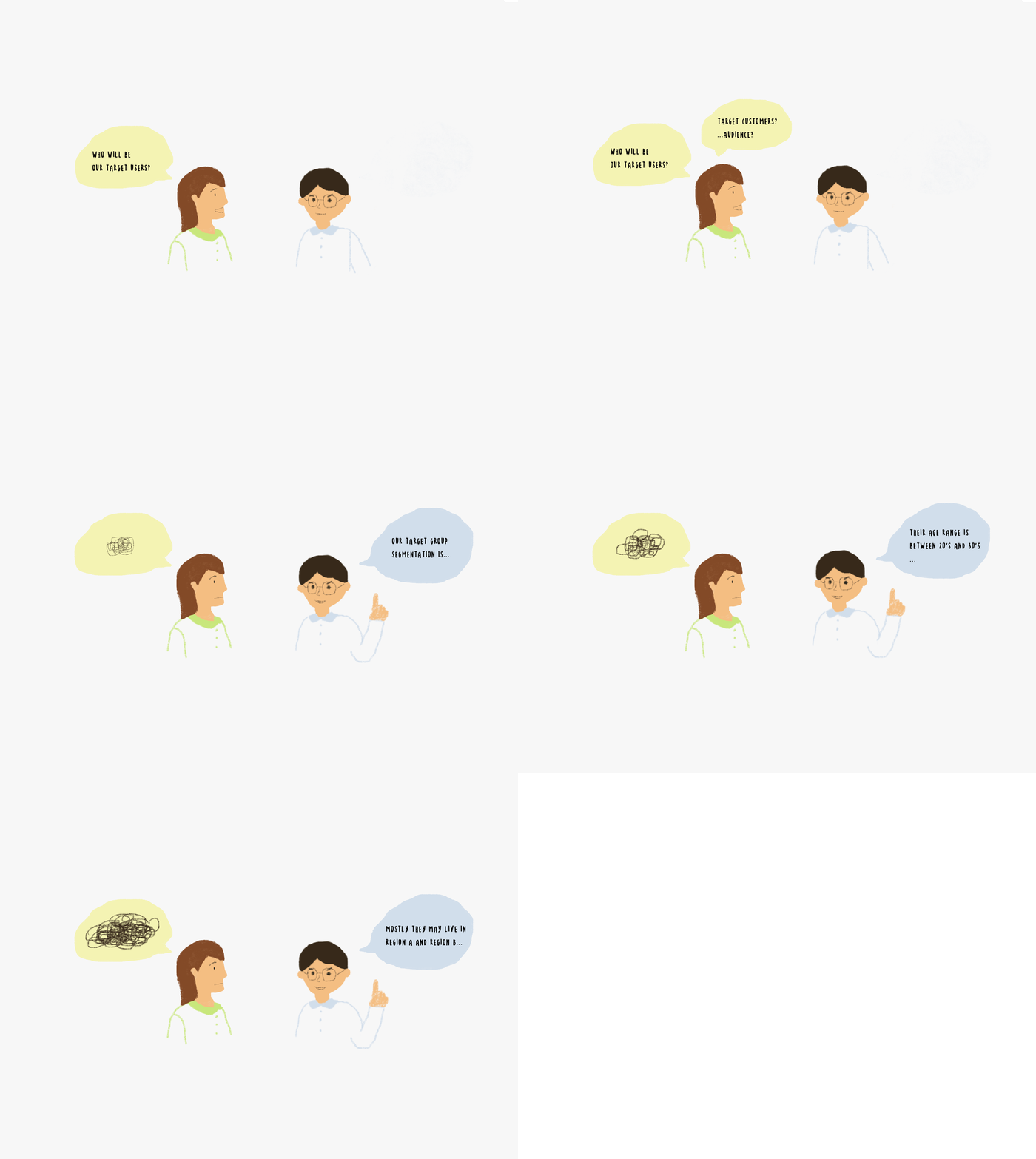
Illustrated by Hye Yoon
And many times they are described in this way:
“Our target group segmentation is…” “the customer age group is mid 20’s – 30’s…” “the customers mostly live in…” “Their income range is…”
In contrast to that customer segment approach, the use of Persona heightens a sense of empathy and a realization that they are people surrounding us. Especially when we call them with an archetypical type and a person’s name – the retired active explorers “Racheal” or the retired part-time job seeker“Joshua“, etc.
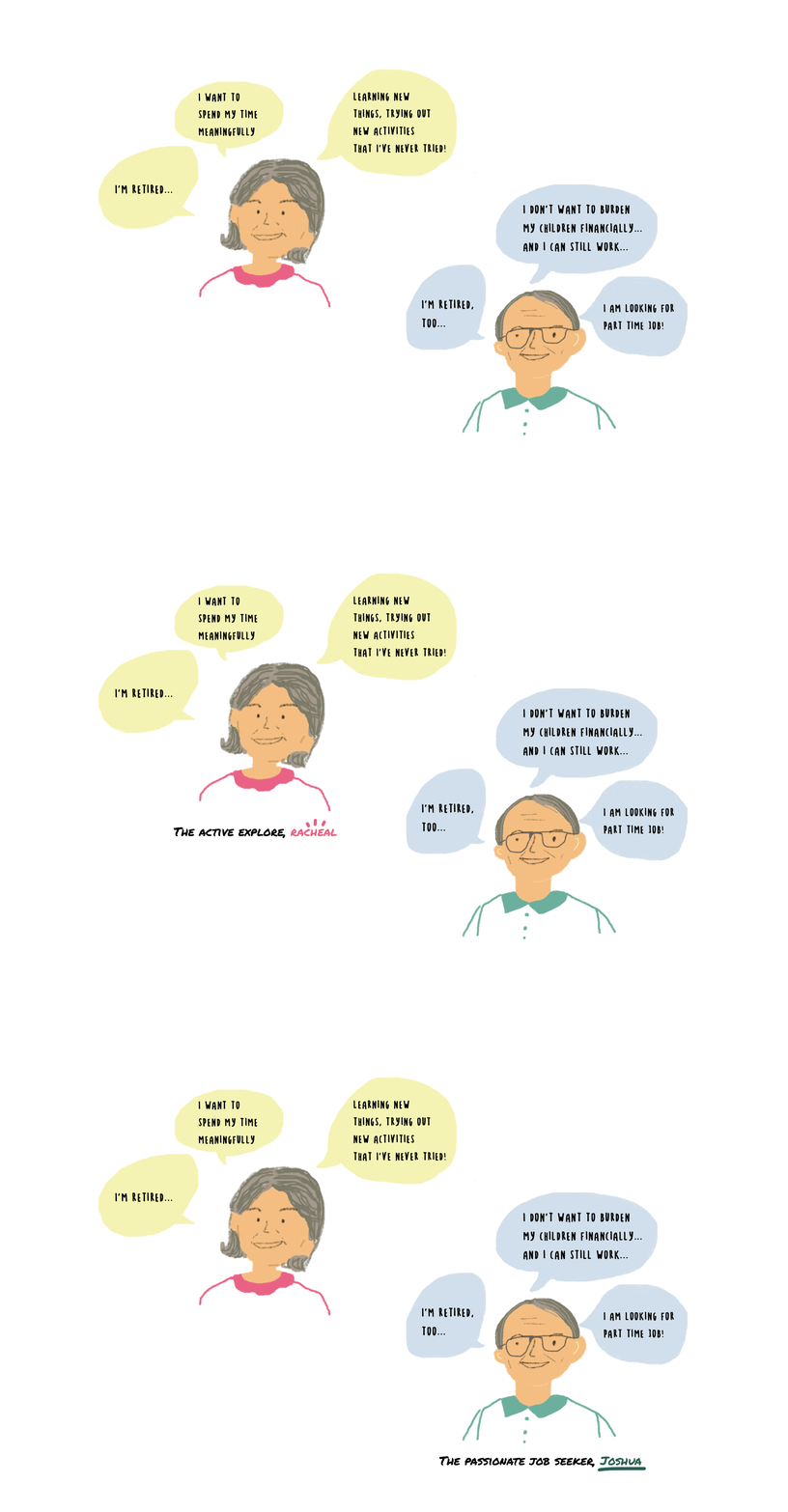
This gives us a different level of conversations in the product ideation stage, such as:
A: “Oh, I think this type of solution won’t appeal to Racheal, but may work for Joshua…”
B: “Yes, we’d need to come up with solutions to fulfill the needs of both, Racheal and Joshua”
For your solutions to be specific with Personas
Imagine that you’re planning to design a product for the elderly. Although the general trends in the elderly’s needs and motivations can be observed: Many of them may have retired so they are likely to have more free time. Physically, motor skills and mobility could have deteriorated significantly.
However specific needs and motivations can be addressed according to physical/mental aging stages, societal, ethnographical and behavioral characteristics.
For example, Racheal may want to explore interesting activities and learn a new skill in order to spend her free time more meaningfully, while Joshua wants to earn a living though part-time work as he doesn’t want to be a burden to his children. Accordingly, leisure or learning programmes and services for senior groups would be something Racheal desires to have, however it won’t be highly prioritized in Joshua’s scenario.
Design solutions, branding, and contents could be definitely differentiated to address either Racheal’s needs or Joshua’s needs. And, this is what Persona does – help you to come up with specific solutions that consider a specific person’s needs and motivations.
So, who are they – a real person/human

In the end, your users and customers are human beings, coming from different age groups, societies, cultures, personalities, and educational backgrounds, addressing different sets of challenges, needs and motivations.
Frankly speaking, they are around us. They could be our family members – grandparents, parents, friends, nephews, and children. They could be our neighbors – cousins, neighbors living next door or within the same town.
It doesn’t mean that we should view our target users/ customers as familiar people which could be biased to take without user research outcomes, rather it’s to suggest taking a view to see them as a real ‘person/human’ who will use your products and services and benefit from using them.
When do we need it – You can craft it early!
The persona-creation process should be a part of the research phase for a new product development process, which can be created after your Field studies, surveys, user interviews, and other methods of user research to define characteristics of your users and needs and pain points.
Update the persona again (as target user groups/ actual user groups can be changing) after testing or launching the product solution.
However, if you haven’t conducted any research and have no validated data, you can take this as an opportunity to craft an assumptive persona, a ‘proto persona’ which can be drafted before user research and talking to real people. This will help your team to be human centered when coming up with hypotheses for your new services and products. It will even inform your user research planning to define research participant profiles, whom your team needs to talk to.
Written by Hye Yoon
Hye Yoon, based in Singapore, works as a UX Researcher and actively applying ‘Human-Centric’ framework to draw out actionable and meaningful design insights. For more information, please email me directly -> minejeng@gmail.com

 Min Hye-Yoon, 민혜윤