
Explorative studies – to define challenges
During the exploratory stage, Werable, an inclusive fashion design solution aimed at innovating the dressing experience for senior stroke patients and their caregivers. To identify opportunities, we conducted user research to define the primary challenges caregivers face when assisting with dressing.
This exploration includes:
- Literature review
- Body storming
- User interviews with caregivers

Literature Review

Body storming

User Interviews with Care-givers
1️⃣ Literature review.
We reviewed 58 resources, online articles, research papers and social media contents such as Youtube videos produced based on Singapore. And analysed who’d be the main care-givers’ profiles, what’d be the major challenges addressed among care-givers.
Key findings on caregivers’ challenges in assisting their care recipients with dressing in the literature reviews:
Who are they – care givers’ profiles?
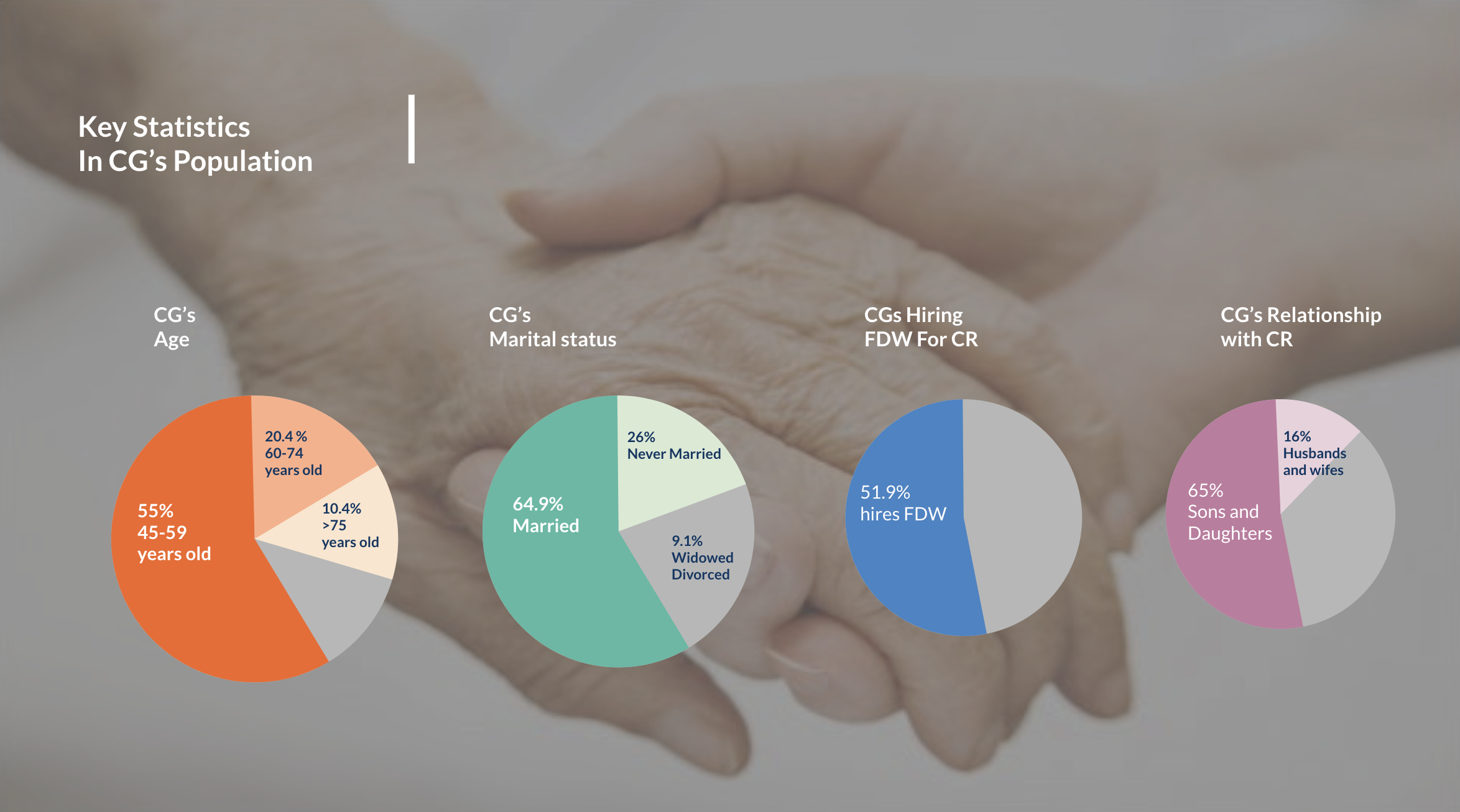
The majority of caregivers (55%) are between 45 and 59 years old. They are highly likely to be the sons or daughters (65%) of care recipients and are often married with children of their own. The second-largest group consists of spouses (16%), primarily husbands and wives who are retired, aged 60 to 74 (20.4%), and living with their spouse to provide care.
What are the main challenges faced by CGs?
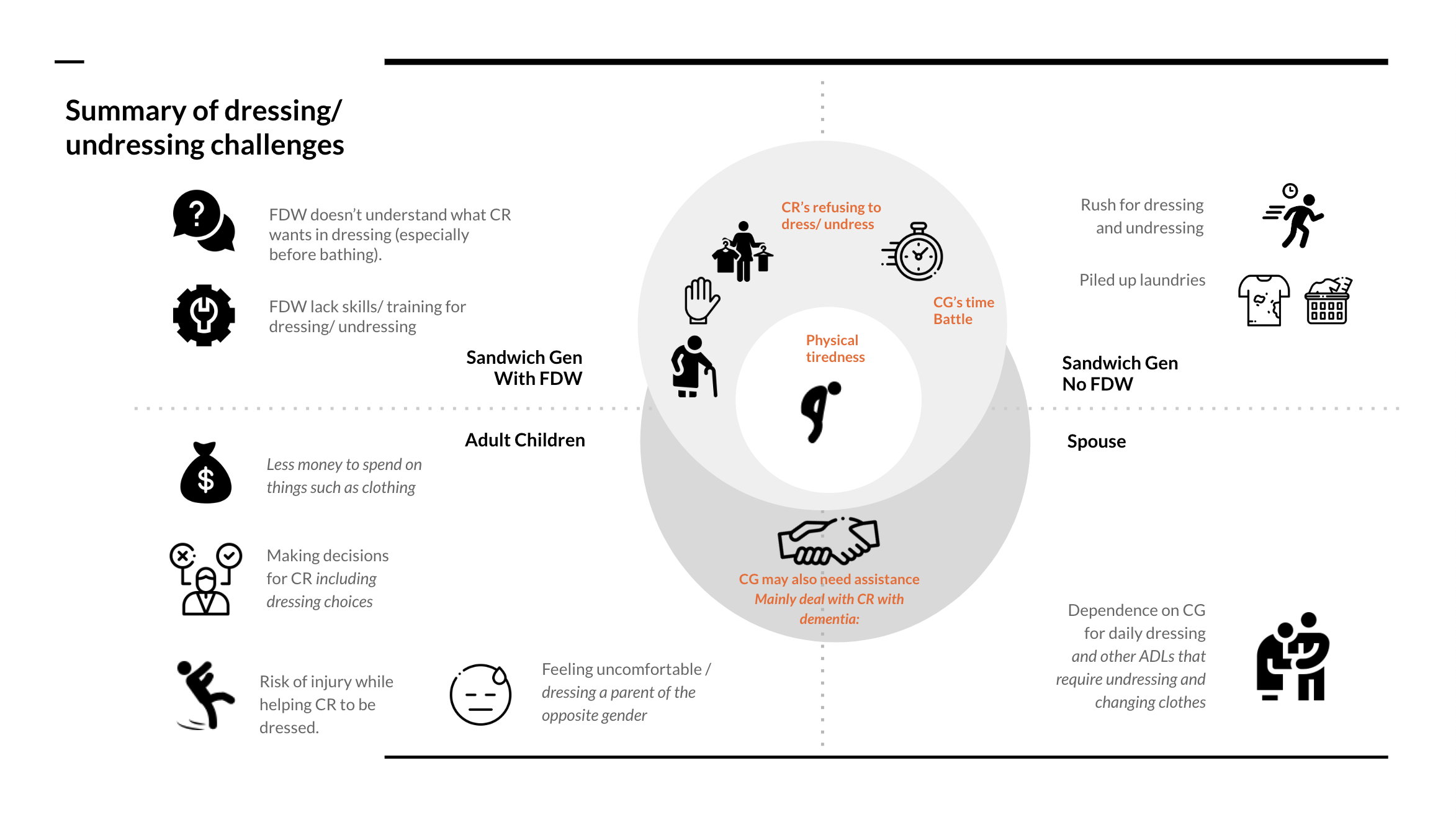
It implies a different set of challenges addressed by these two unique profiles: one facing multiple duties and responsibilities at their life stage—especially worsening without the support of domestic helpers—and the other experiencing physical limitations due to aging.
For sons and daughters—especially those caring for both their parents and children, known as the “sandwich generation”—the demands of caregiving can be physically and mentally exhausting. Balancing financial, emotional, and caregiving responsibilities while managing work and household chores adds to their stress.
For spouse caregivers, the care recipient is often highly dependent on them, as they are the person their spouse feels most comfortable with. However, this strong sense of comfort and reliance can also increase the caregiver’s physical burden. Over time, spouse caregivers may themselves require caregiving support as they age, making long-term sustainability an essential factor in caregiving solutions.
To support these care givers, easy and quick dressing/undressing garment solutions are crucial for them. Additionally, parents who rely on their children for assistance may sometimes feel embarrassed when undressing, making dignity-preserving solutions an important consideration.
2️⃣ Bodystorming: What It Is and When to Use It?
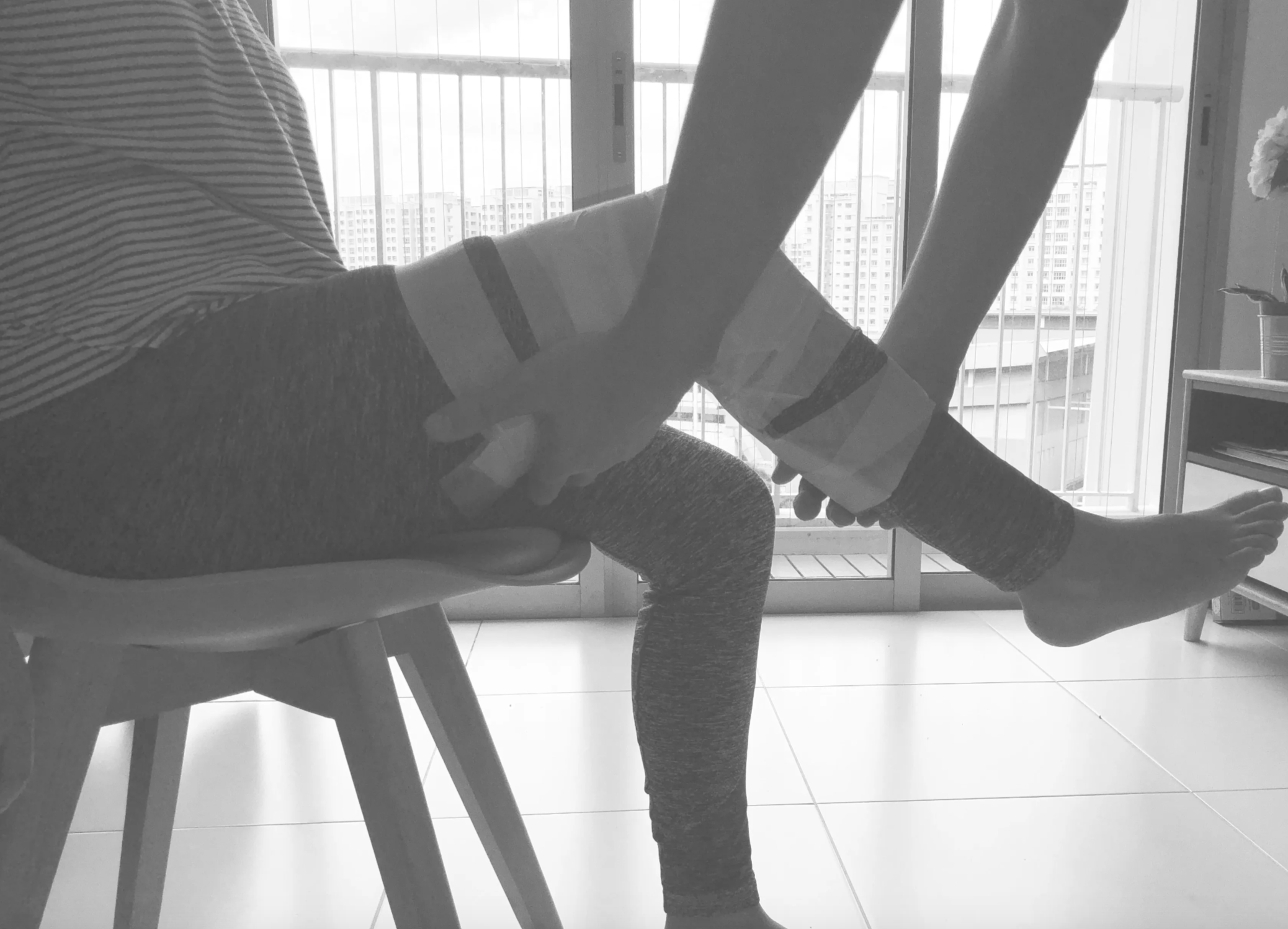
The term “bodystorming” was introduced in the early 90’s to identify what was working and what wasn’t at the early stage of the product development process. Bodystorming simulates the roles of users by testing out a product in a similar situation that your users may be in. While bodystorming seems similar to role play study which also requires you to play the role of target users in a simulated situation, low-fidelity mockups or props (products that you are targeted to design) are a key requirement in bodystorming.
This helps our team fuel empathy by letting you act, feel, and think like your users before meeting them in person. In addition, it helps the design team continue to gain insights on possible problems and issues that could occur from the designs.
3️⃣ User interviews
• Total participants: 6 pax
• Age Range: 40 – 70 years old
• Care givers Roles; sons and daughters/ spouse
• Interview duration: 60 mins
• Care Receivers Recover Stage: Early, Mid, and Late stages of stroke recovery
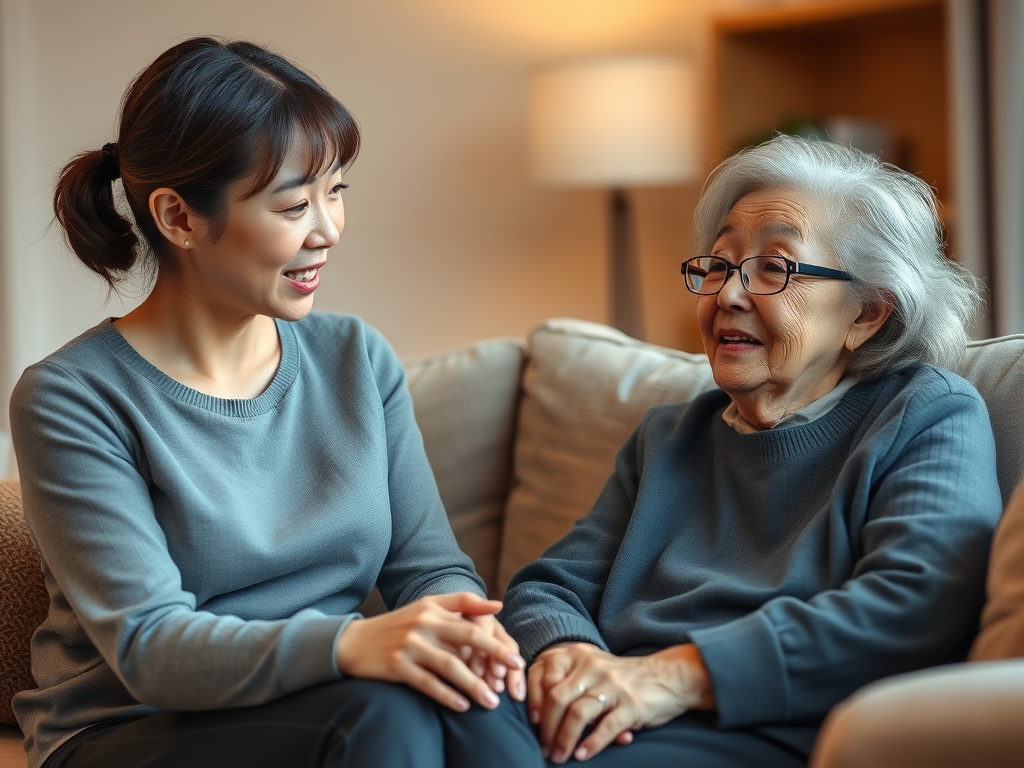
We interviewed six participants, representing two key profiles: sons/daughters and spouses.
To recruit highly relevant participants, our team contacted the Stroke Support Station, sharing our project goals, purposes, and the potential benefits of the design outcome for their beneficiaries. This resulted in a strong pool of contacts aligned with our target audience.
An hour interviews were conducted, either at the participants’ homes or at the Stroke Support Station, depending on their preference. Key interview questions included:
- How did you become a caregiver?
- How has the care receiver’s condition affected you (e.g., daily routine, emotions, etc.)?
- Please describe the care receiver’s condition.
- What is the care receiver’s daily routine, and when do they need assistance with dressing/undressing?
- What solutions have you tried, and what has worked or not worked?
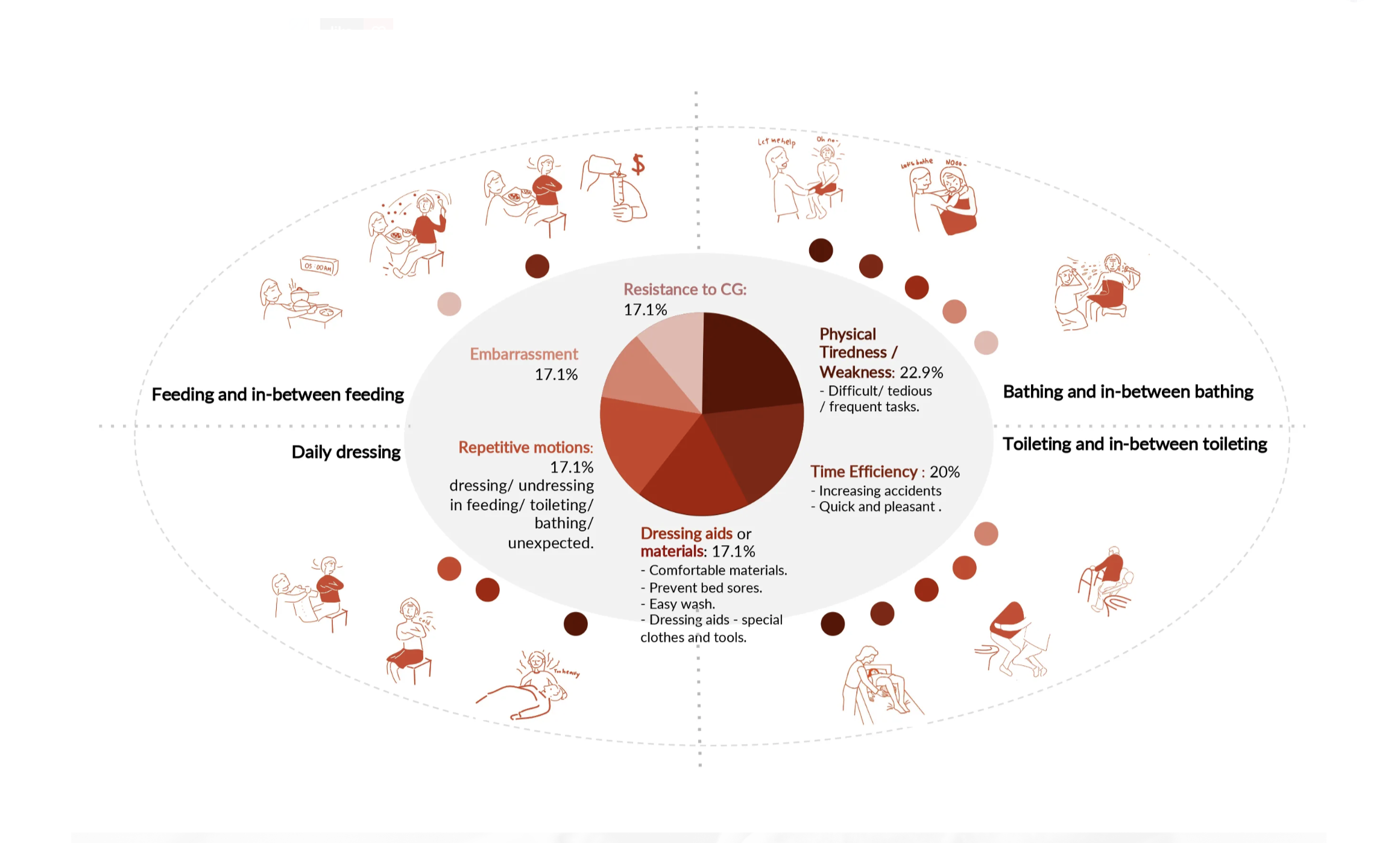
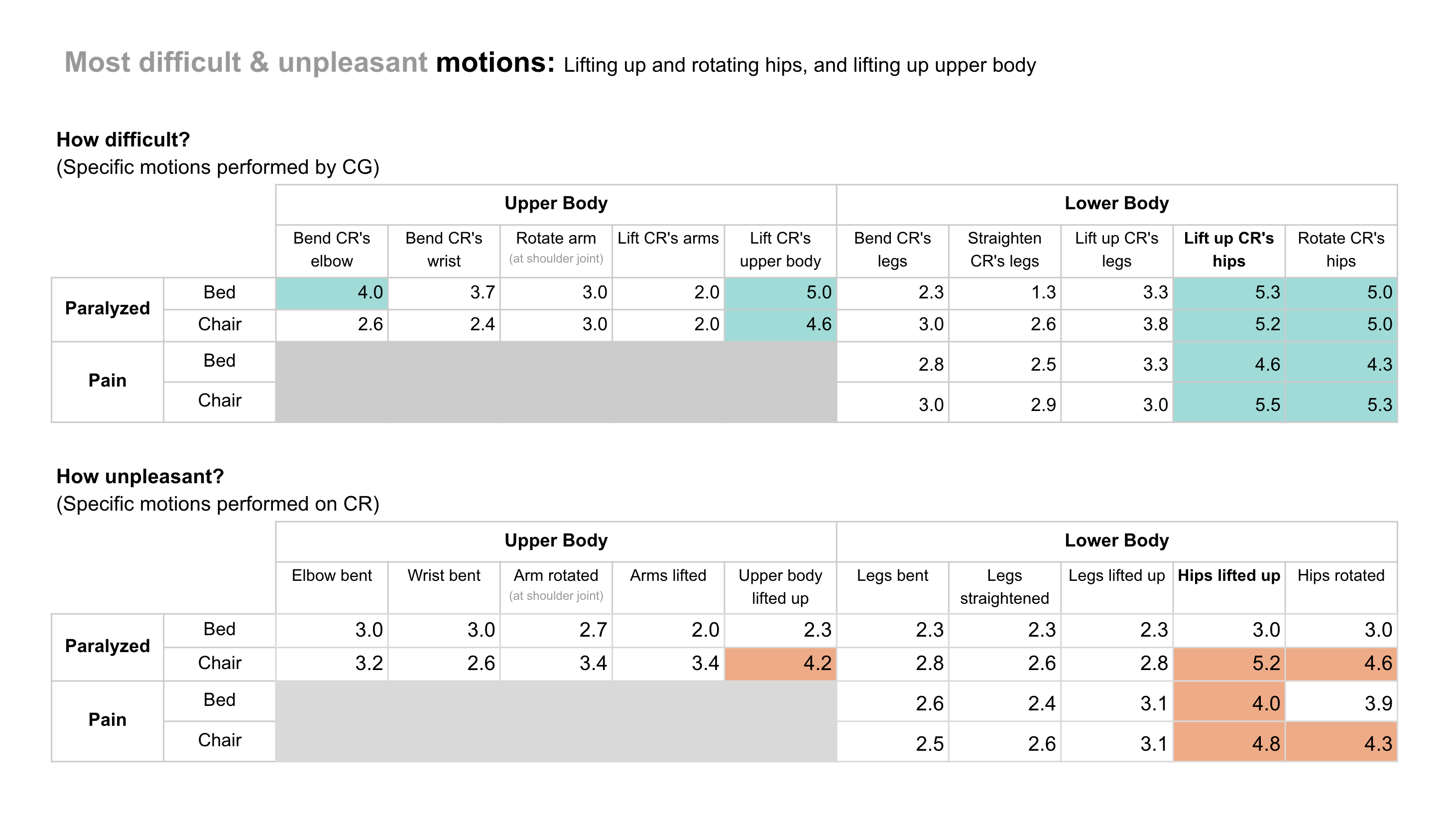
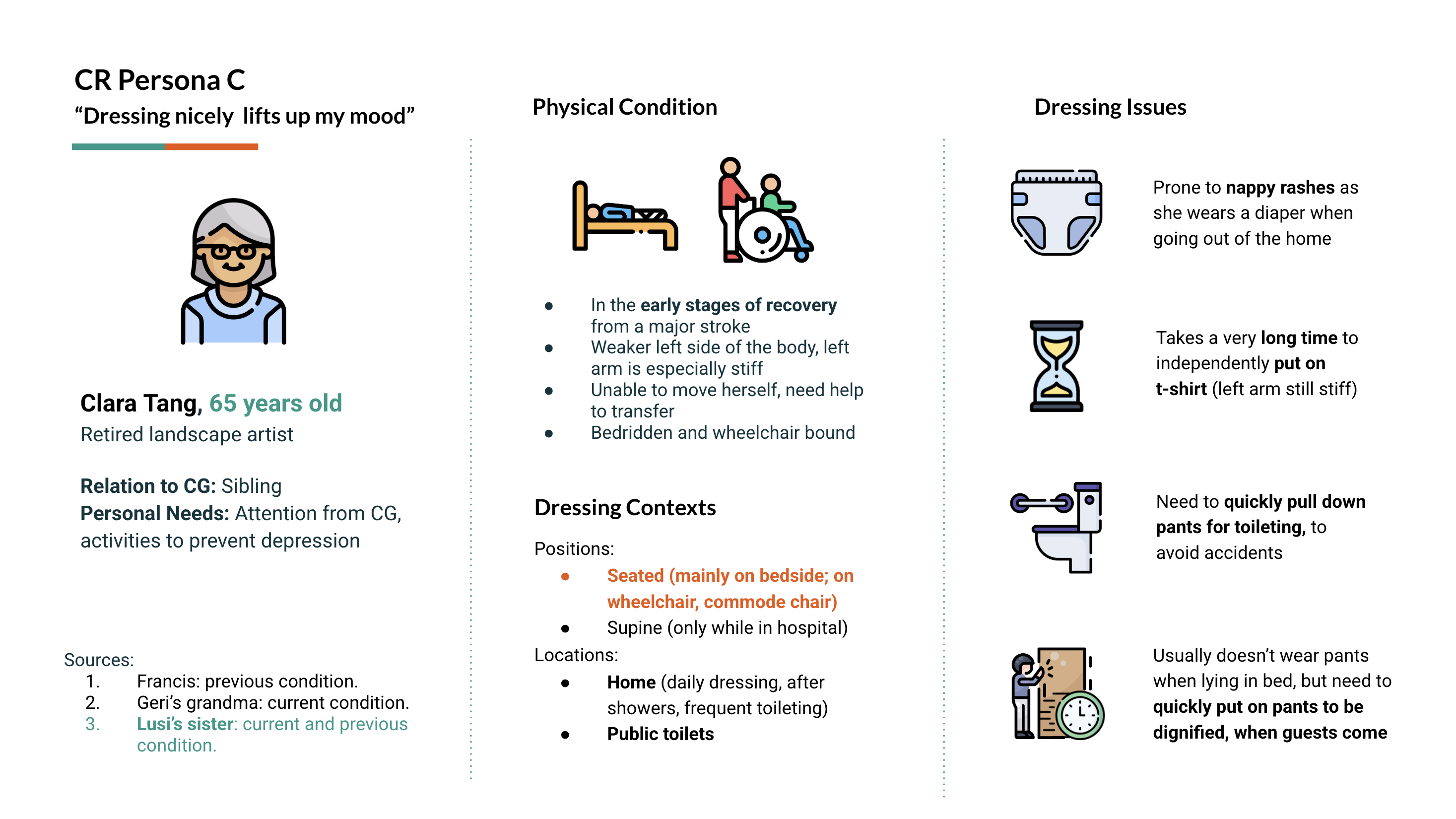
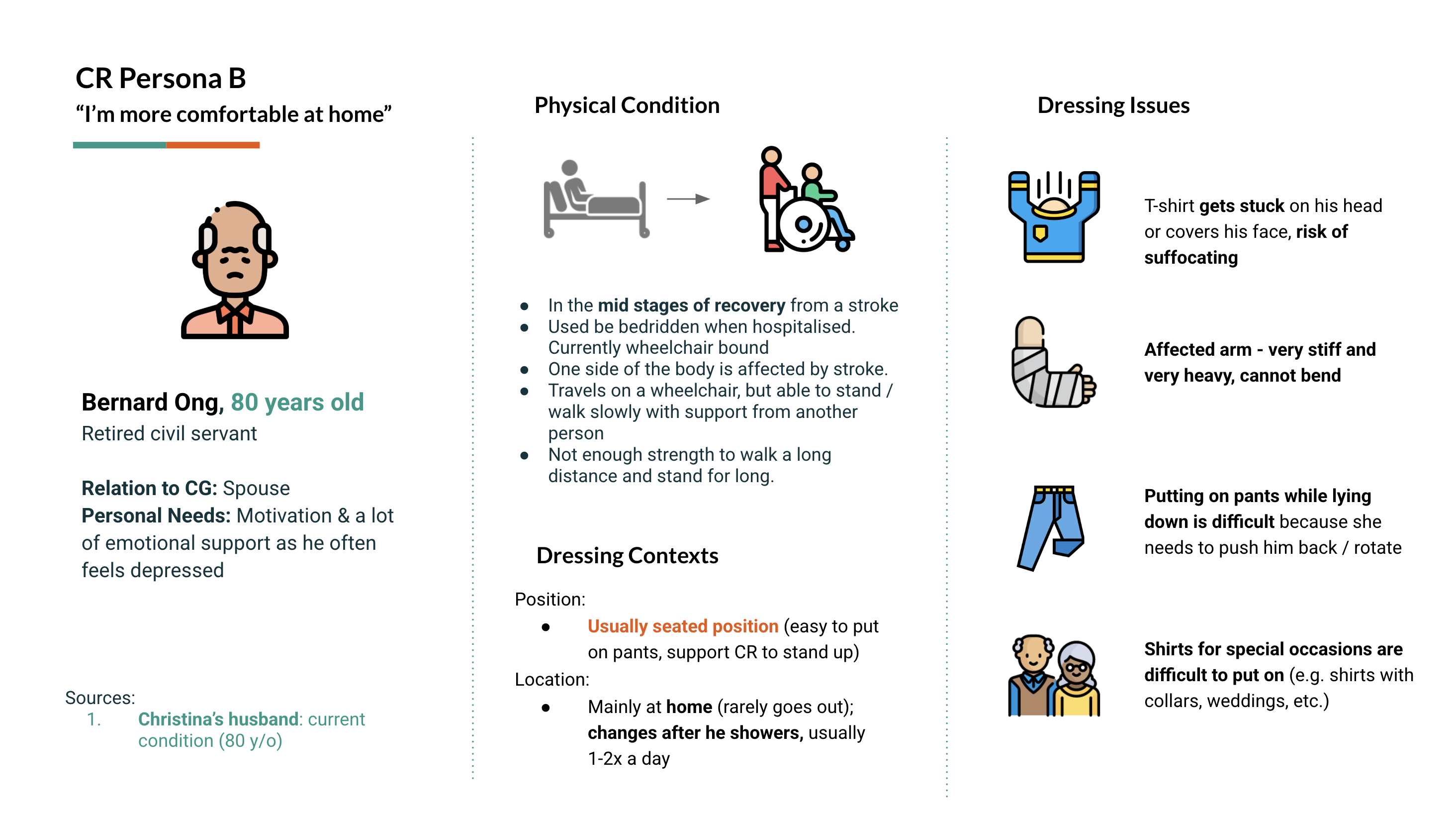
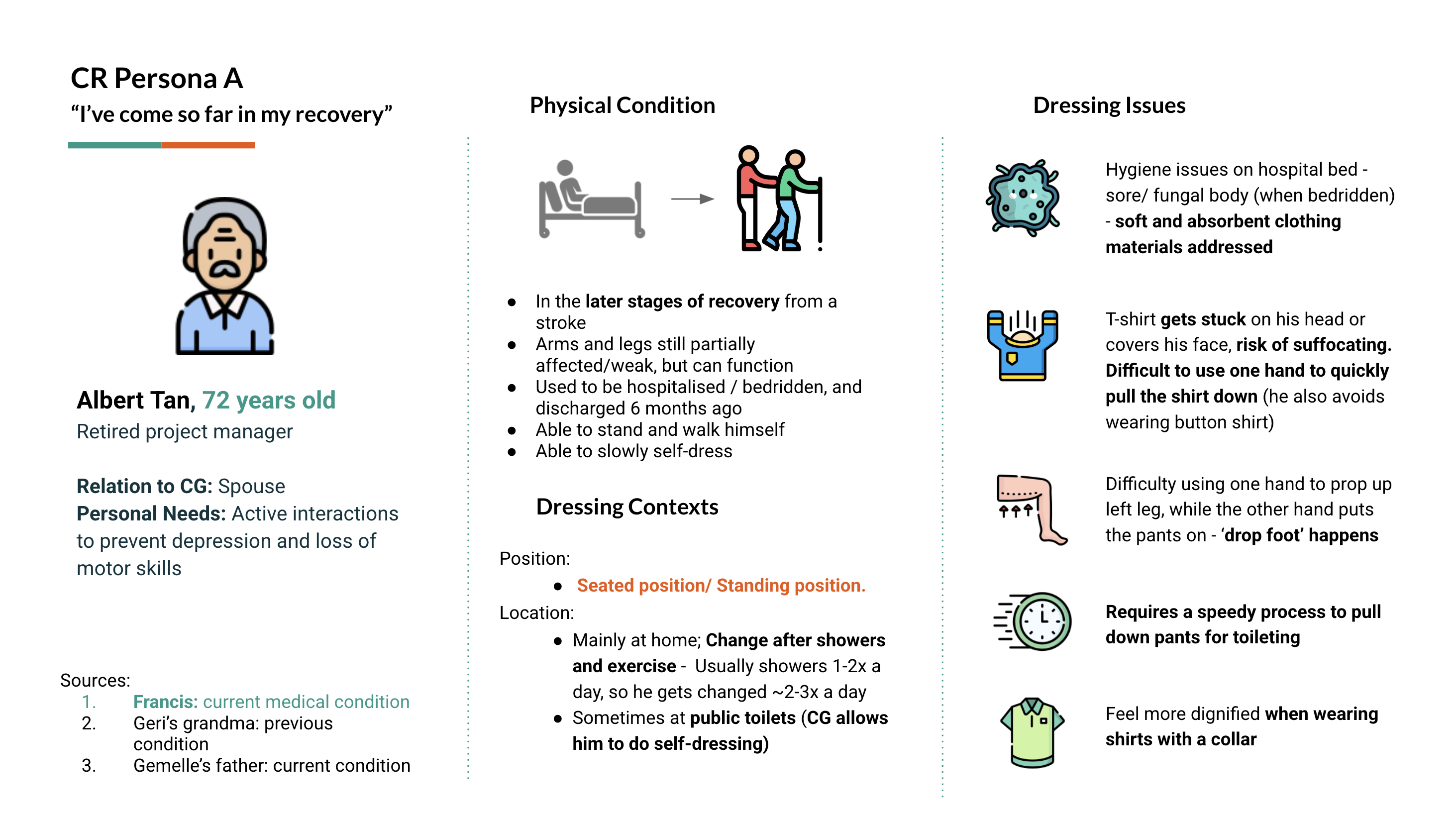
The interview outcomes were summarized visually, highlighting the challenges faced by care receivers.
 Min Hye-Yoon, 민혜윤