
Social/ environmental Context:
The landscape of parent-child communication in Singapore, particularly at the upper primary level (Primary 4-6, ages 9-12), presents unique challenges and requirements that demand careful attention.
Upper primary students experience multiple stressors including academic pressure from the Primary School Leaving Examination (PSLE), tuition demands, high parental expectations, social stress from friendship issues and peer pressure, family performance pressures, and physical and emotional changes associated with early puberty.
Why Survey?
Building on the outcomes and insights from our previous participatory workshop [article link], my team identified a clear need for a solution—whether digital or physical—to bridge the communication gap between parents and children. Before moving forward with ideation, I recommended that we further validate this need through a targeted survey. By incorporating this additional research method, we can effectively triangulate our findings, strengthen our hypothesis, and gather fresh insights to inform and enrich our upcoming ideation process.
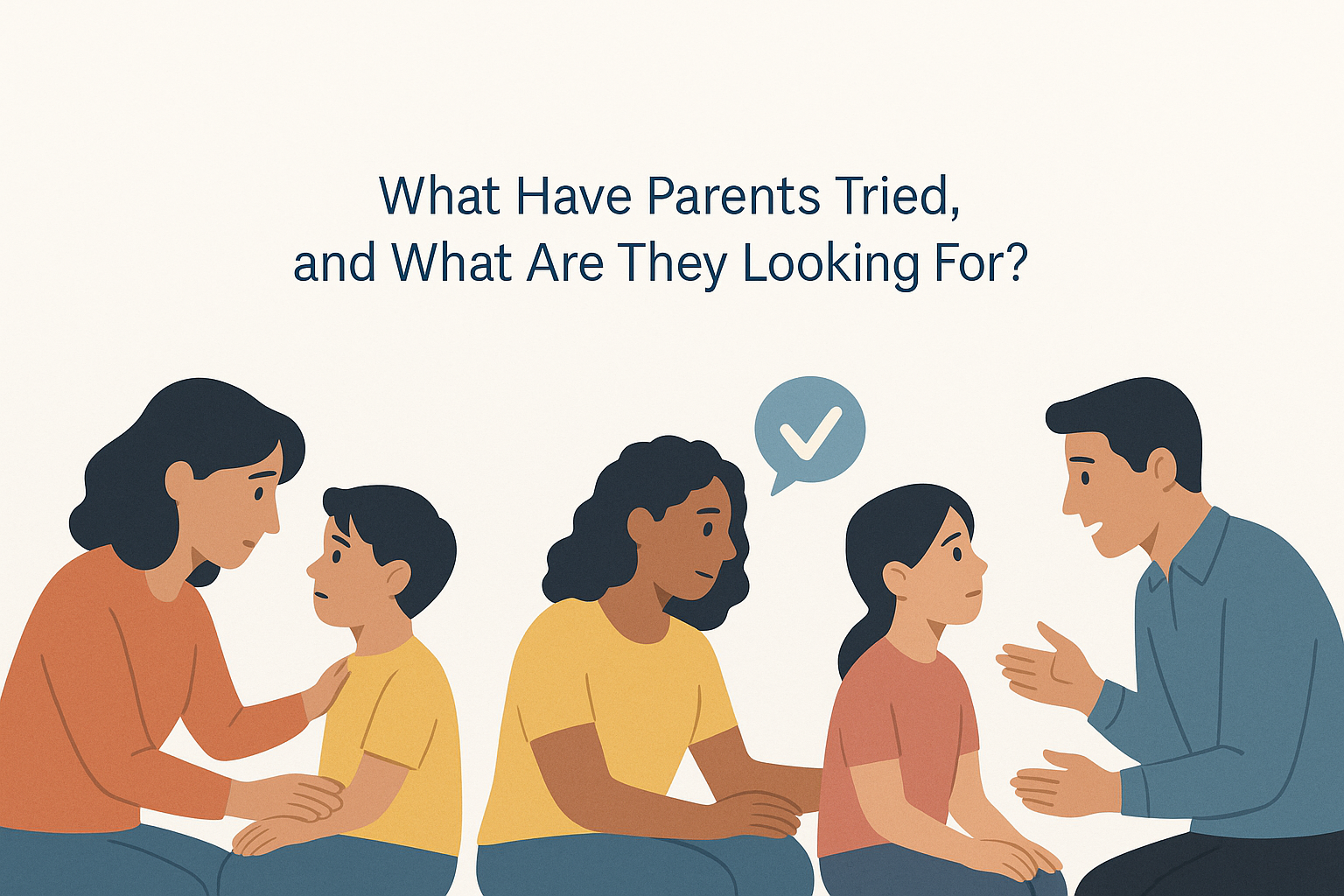
Validating parental needs in enhancing parent-child communication through survey study
- Survey Period: 17th April – 30th April, 2023
- Data collection channels:
- Words of mouth
- Social media (e.g. Telegram group)
- Survey Monkey
- Total number of responses
- 124 (mothers an fathers whose children are under upper primary level)
Research question #1:
Value Proposition (Validate needs/goals)
How valuable/ desirable will it be for parents to have better communication solutions?
Research question #2:
Parents’ profiles who address the need:
Occupation/ Income level/ Race/ Parenting style/ Communication pattern
Research question #3:
Current Product/ Solution Tools:
What are the products/ tools they tried to enhance parent-child communication? What worked/ didn’t work?
💡Findings on Parents’ Profile:
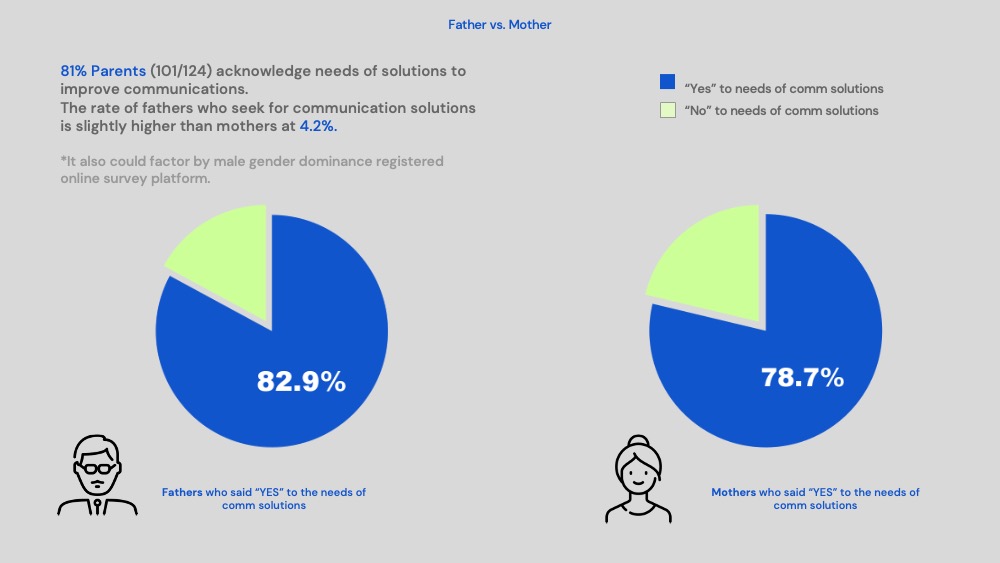
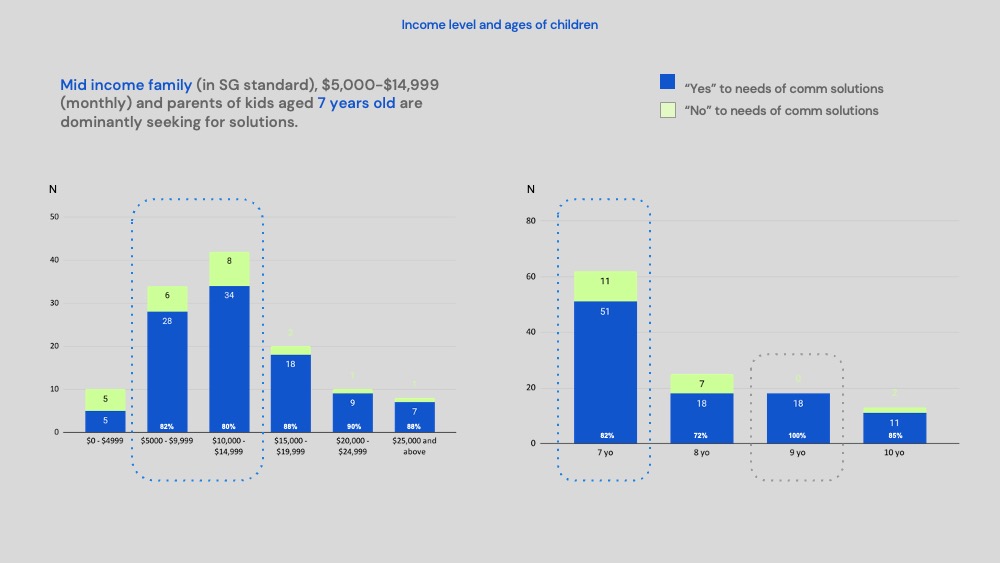

Parents who seek for the parent-child communication solution:
- Both mothers and fathers, but fathers’ rate was slightly higher
- When it comes to race, Chinese are dominant. Note that the majority of them participated in the survey are Chinese
- Mid income family (in SG standard), $5,000-$14,999 (monthly) and parents of kids aged 7 years old are dominantly seeking for solution
- Most parents believe that parents should give their children guidance, while allowing their children to make their own decisions – they pursue ‘authoritative’ parenting style
⚙️ Solution Seeking Behaviours:

For parents, both who need, do not need solutions- Most parents trust in advice from expert groups which in turn influences their parenting decisions
*Parents who need solutions, tend to follow other fellow parents’ advice too.
☝️ What Solutions Parents Tried, What Worked/ Didn’t Work?
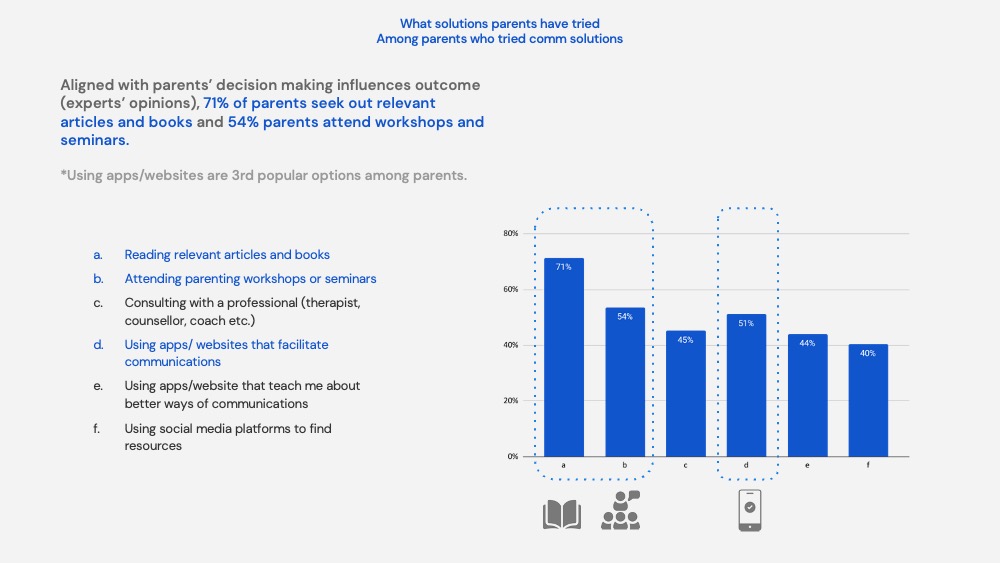
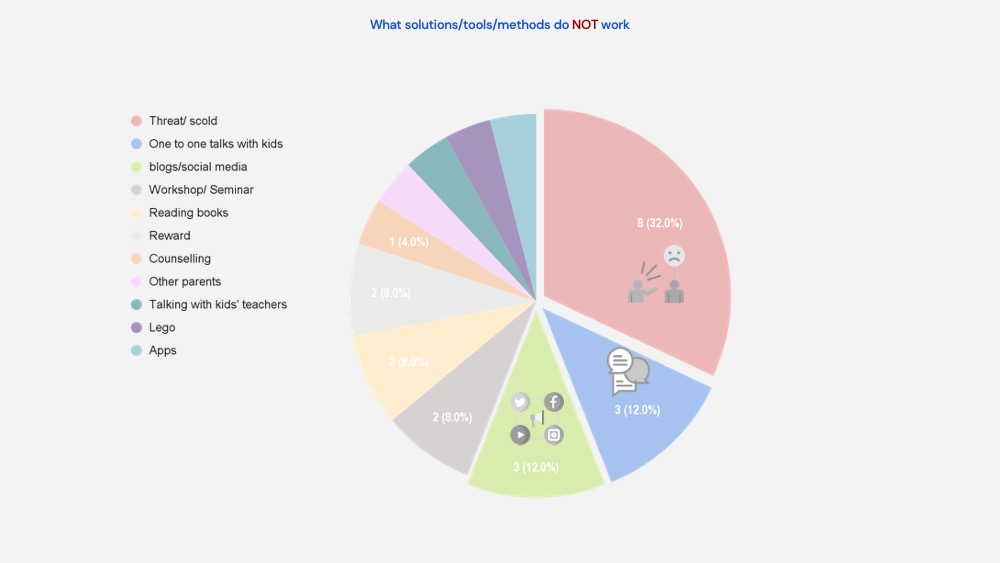
Solutions parents tried:
- The elements of experts groups’ resources in the solution would be a significant factor to attract parents group
- They read articles or books written by experienced figures in the topic
- They attend workshops or seminars presented by domain-expert groups
- Interestingly they tried apps/websites (digital tools) that facilitate parent-child communications
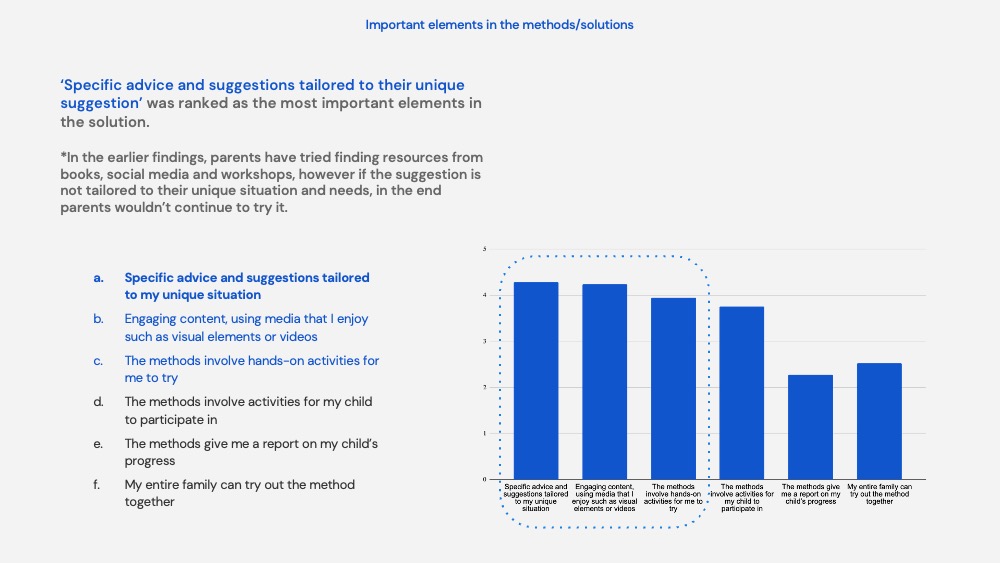
However, the solution should address their unique cases/ situations:
- Solutions should be tailored to their unique needs and cases, otherwise the solution can be too general, not resolving their cases
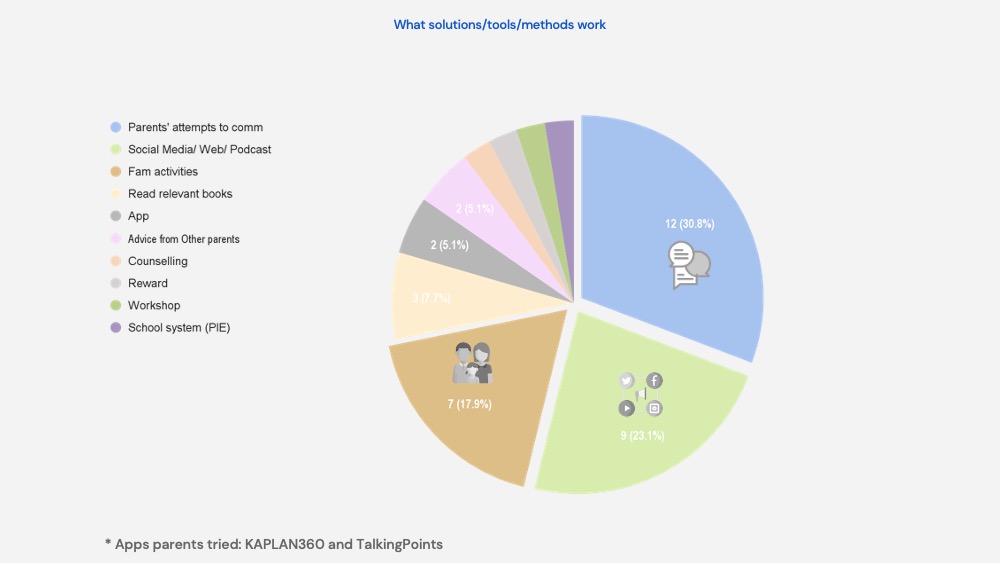
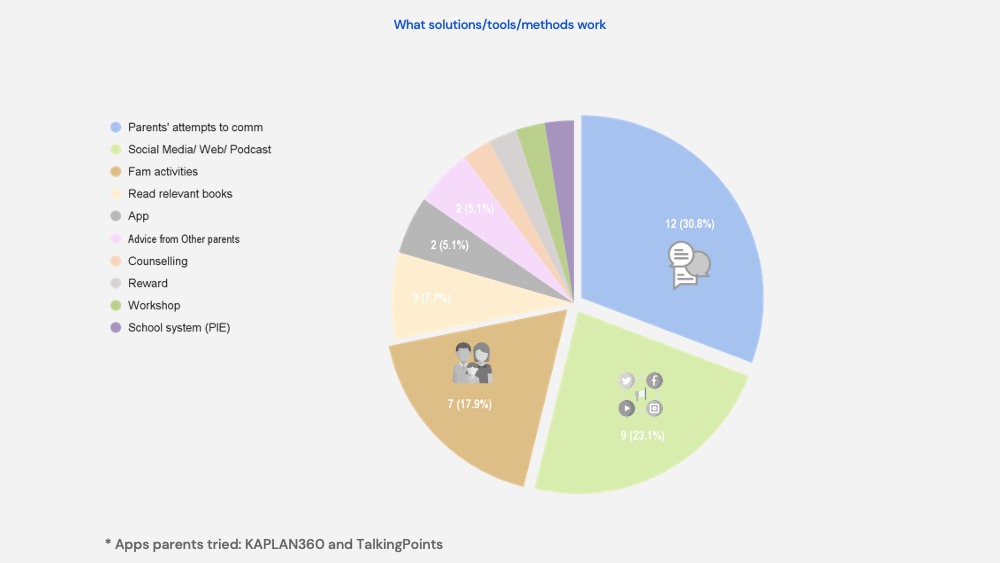
*Social media/ blogs search for the solution:
It reflects how active parents’ web search experiences are, which might be due to free of charge to get info as well as time efficiency instead of going to find and arrange child professionals
Conclusion:
The survey findings highlight a clear need for solutions that support improved parent-child communication. In particular, mid-income families show strong interest in trying solutions that are specifically tailored to their unique circumstances and challenges. While they tend to place high trust in expert-led programs, the higher cost often pushes them to seek out alternative approaches—such as searching social media for real-life examples and practical tips they can try on their own.
These insights reveal key opportunity areas:
- How might we design a low-cost but tailored, practical solutions that meet families where they are?
- How might we serve as a bridge—connecting parents not just to one-time resources, but to ongoing, hands-on support they can continue to use with their children?
 Min Hye-Yoon, 민혜윤